



A Course Syllabus for History of Literary Theory and Criticism: From Plato to Metamodernism
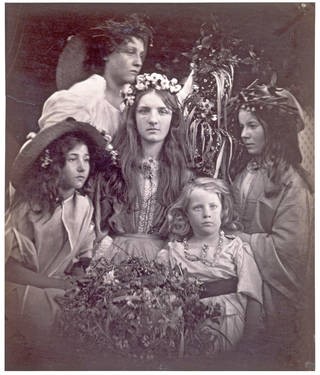
May Day, photograph, by Julia Margaret Cameron, 1866, England.
Museum no. 933-1913. © Victoria and Albert Museum, London
Part 1: Course Overview
Literary theory and criticism are sibling branches that go hand in hand with literature. Without a doubt, they both are also as old as literature herself. It is certain that ancient poets, say Homer, had their critics. Homer, as many other ancient and modern poets tend to, invokes the muses. This act in itself is a theory of poetry. The muses are invoked at the beginning epics of Homer or the likes of him. This is a theory that posits poetry as an artistic utterance inspired by the divine. Plato calls the same notion divine madness. Aristotle later challenged this; emphasizing the sophistication and necessity of verbal art. Later, he brought forth the most famous and most efficient theory of poetics and tragedy. We will discuss critics, philosophers, and poets who contributed significant efforts to answer the following queries: “What is good literature? What is literature good for? How are we to interpret literature? What is the relationship between author, text, reader, and world?” Texts from classical, neoclassical, Romantic, Victorian, Modernist, and Postmodernist traditions and contemporary trends will be introduced and perused. In choosing these texts two criteria have been considered: First, they are pivotal texts of their respective literary traditions; in some cases, they inaugurated or influenced certain traditions significantly. In several historical discourses, they are the high points. The second reason is that some of these texts are still shaping the discourse of literary criticism/theory.
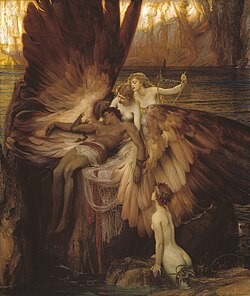
The Lament for Icarus- H. J. Draper
Part 2: Course Objectives/Outcomes
Performance quality in this course is highly dependent on two pivotal factors. First, instructor’s competence, strategy and choice of reading materials. Second, student’s comprehensive close reading of the given materials. If these two are achieved, the course will be able to approximate the following outcomes:
• Students will be able to grasp a clear understanding of important texts in the history of theory and criticism.
• Students’ faculty of critical thinking will grow to reach a certain level of sophistication so as to peruse and read texts of literature critically. But reading and analyzing texts is the eventual outcome of this course not the immediate one.
• We will have an understanding of historical attitudes toward literature. This is important for comprehending current issues in literary theory, and for use in the classroom/research. How theory and criticism has shaped the field of literature and other related fields is another objective.
Part 3: Required Texts
Book Required:
Leitch, Vincent B. Norton Anthology of Theory and Criticism. Norton & Company Limited, W. W., 2018. Third edition
Major Sources:
1. The Cambridge History of Literary Criticism (Volumes One to Seven), Cambridge: Cambridge University Press, 2011.
2. The History of Literary Criticism from Plato to the Present, M. A. R. Habib, Oxford: Blackwell, 2005.
3. An Introduction to Literary Criticism. Richard Dutton. Longman, 1984.
4. A Short History of Literary Criticism. Vernon Hall. The Merlin Press, 1963.
Suggestions for Further Readings:
Eagleton, Terry. Literary Theory an Introduction. University of Minnesota Press, 2008.
⃰indeed more books, papers, and other materials will be mentioned during the course. Yet, these two are primary for every literature student. There will be some parts of these two’s content delivered during the course, and only a small portion of these parts are going to be on your final exam.
Part 4: Classroom Rules and Standards of Online Behavior
• All electronic gadgets must be off or set to silent mode. If you use them for reading PDFs and other class-related files, make sure they will not distract you or others so as to prevent the class from digressions.
• Punctuality is a non-negotiable must.
• Class activities are expected of the students.
• Last but not least, respect the class. Do not leave the class in groups during the breaks. You absolutely must not extend breaks’ duration on your own authority. For each session, a 10 minute break is already scheduled.
You all have my thanks and appreciation since you have always observed these rules and regulations. Bringing them here again is only a matter of formality and academic regulations.
Part 5: Shedule
Literary Theory — 45-Session Study Plan
On mobile, swipe horizontally to view all columns.
| Session | School or unit | Thinkers and primary readings | Concepts and likely exam handles | Priority / evidence |
|---|---|---|---|---|
| 1 | Orientation and diagnostic | Norton, Introduction to Theory and Criticism; sample MA/PhD questions | Interpretation, literature, school, method, theorist, concept, how to distinguish definition, attribution, and passage questions | Review / method |
| 2 | Classical criticism I | Plato: Ion; Republic, Books II, III, VII, and X; Phaedrus | Mimesis, inspiration/divine madness, truth, censorship, forms, rhetoric | High priority: Plato |
| 3 | Classical criticism II | Aristotle: Poetics, first half | Mimesis as learning; tragedy; action; plot; character; probability and necessity | Very high priority: Aristotle |
| 4 | Classical criticism III | Aristotle: Poetics, second half; selections from On Rhetoric | Catharsis, hamartia, reversal, recognition, unity, rhetorical appeals; comparison with Plato | Very high priority: Aristotle |
| 5 | Classical poetics and the sublime | Horace: Ars Poetica; Longinus: On Sublimity | Decorum, instruction and delight, poetic craft, elevated language, transport, sources of sublimity | Repeated: Horace / Longinus |
| 6 | Renaissance and neoclassical defenses | Sidney: The Defence of Poesy; Dryden: Essay of Dramatic Poesy; Johnson: On Fiction | Poetry’s moral defense, imitation, genre, rules, ancients/moderns, fiction and probability | Repeated: Apology |
| 7 | Taste, aesthetics, and historicism | Hume and Kant in Norton; Taine; race/milieu/moment (course packet) | Standard of taste, disinterested judgment, beautiful/sublime, historical determinism, race-milieu-moment | Substantial: Taine |
| 8 | Romanticism and hermeneutics | Wordsworth; Coleridge; Schleiermacher | Poetic language, emotion and recollection, imagination/fancy, symbol, grammatical and psychological interpretation | Core historical bridge |
| 9 | Russian Formalism | Shklovsky, “Art as Technique” (course packet); Jakobson, “Linguistics and Poetics” | Literariness, defamiliarization, device, dominant, poetic function | Core school foundation |
| 10 | New Criticism I | Ransom, “Criticism, Inc.”; Brooks, “The Heresy of Paraphrase” | Autonomy, close reading, tension, irony, paradox, organic unity | High priority: New Critics |
| 11 | New Criticism II and exam clinic | Wimsatt and Beardsley, “The Intentional Fallacy”; comparison set | Intentional and affective fallacies; evidence inside the text; timed attribution and concept questions | High priority: New Critics |
| 12 | Structuralism I: language | Saussure, Course in General Linguistics | Signifier/signified, arbitrariness, value, langue/parole, synchronic/diachronic, syntagm/paradigm | Very high priority: Structuralism |
| 13 | Structuralism II: systems and codes | Levi-Strauss; Jakobson; selected structuralist examples | Binary opposition, myth, code, metaphor/metonymy, transformation | Very high priority: Structuralism |
| 14 | Structuralism III: Barthes | Barthes: Mythologies; “The Death of the Author”; “From Work to Text” | Myth as second-order signification, author-function debate, readerly/writerly movement, text/work | High priority: Barthes |
| 15 | Structuralism IV: narratology | Todorov, “Structural Analysis of Narrative”; Frye, The Archetypes of Literature | Story/discourse, grammar of narrative, genre, archetype, sequence and equilibrium | Substantial: Todorov |
| 16 | Structuralism and semiotics lab | Comparative review: Saussure, Jakobson, Barthes, Todorov | Apply structures to a short poem and narrative; recognize terms across theorists; timed exam set | Very high: cluster review |
| 17 | Bakhtin and the novel | Bakhtin, “Discourse in the Novel” | Dialogism, heteroglossia, double-voiced discourse, polyphony, chronotope | Repeated: Bakhtin |
| 18 | Psychoanalysis I | Freud: The Interpretation of Dreams; “The Uncanny”; “Fetishism” | Conscious/unconscious, id/ego/superego, repression, dream-work, condensation, displacement, uncanny | Substantial: human psyche |
| 19 | Psychoanalysis II | Lacan: “The Mirror Stage”; “The Agency of the Letter”; “The Signification of the Phallus” | Imaginary/Symbolic/Real, mirror stage, lack, desire, split subject, signifying chain | Core: Lacanian theory |
| 20 | Kristeva as a bridge | Kristeva, Revolution in Poetic Language; intertextuality excerpt (course packet) | Semiotic/symbolic, chora, genotext/phenotext, intertextuality; structuralism to poststructuralism and feminism | Substantial: Kristeva |
| 21 | Reader-response I | Rosenblatt (course packet); Iser, “Interaction between Text and Reader” | Transactional reading, aesthetic/efferent stance, implied reader, gaps, repertoire | Repeated: Rosenblatt / reception |
| 22 | Reception theory and reader-response lab | Jauss (course packet); Fish, “Interpretive Communities” | Horizon of expectations, reception history, interpretive communities, subjective criticism; timed comparison | Repeated cluster: reception theory |
| 23 | Deconstruction I | Derrida, “Structure, Sign, and Play” (course packet); Norton headnote | Center, structure, play, supplement, binary hierarchy, decentering | Repeated: Derrida |
| 24 | Deconstruction II | Derrida, Plato’s Pharmacy; de Man, “Semiology and Rhetoric” | Logocentrism, différance, trace, pharmakon, undecidability, rhetoric/grammar | Repeated: Derrida / logocentrism |
| 25 | Poststructuralism synthesis | Barthes, Kristeva, Derrida, and de Man comparison set | From stable structure to unstable signification; authorship, textuality, intertextuality, aporia; exam clinic | High: cluster review |
| 26 | Foucault I: discourse and authorship | Foucault, “What Is an Author?” | Author-function, discourse, statement, archive, rules of formation | Foundation for New Historicism |
| 27 | Foucault II: power and genealogy | Foucault, Discipline and Punish; History of Sexuality | Power/knowledge, discipline, surveillance, normalization, genealogy, biopower | Foundation for New Historicism |
| 28 | New Historicism and Cultural Poetics | Greenblatt, “Resonance and Wonder”; self-fashioning excerpt (course packet); Hayden White | Self-fashioning, circulation of social energy, thick description, co-text, textuality of history | Very high: New Historicism |
| 29 | New Historicism exam lab | Foucault, Greenblatt, White; short archival/literary pair | Differentiate New Historicism, old historicism, Cultural Materialism, and Cultural Poetics; timed application | Very high: cluster review |
| 30 | Marxism I: foundations | Marx and Engels; Lukács, The Historical Novel | Base/superstructure, ideology, commodity, alienation, class consciousness, totality, realism | Core recurrent Marxism |
| 31 | Marxism II: Althusser | Althusser, “Ideology and Ideological State Apparatuses” | Interpellation, ISA/RSA, reproduction, ideology’s material existence; distinction from false consciousness | Repeated: Althusser |
| 32 | Cultural Materialism and Cultural Studies | Raymond Williams, “Base and Superstructure”; Stuart Hall, “Cultural Studies and Its Theoretical Legacies” | Dominant/residual/emergent, structures of feeling, hegemony, articulation, encoding cultural power | Substantial: Williams |
| 33 | Frankfurt School | Benjamin; Horkheimer and Adorno; Marcuse excerpt (course packet) | Aura, mechanical reproduction, culture industry, mass deception, one-dimensionality, Great Refusal | Repeated/recurrent Marxist cluster |
| 34 | Jameson I: interpretation | Jameson, The Political Unconscious | Always historicize, political unconscious, ideologeme, narrative as socially symbolic act | Very high: Jameson |
| 35 | Jameson II and Baudrillard | Jameson, Postmodernism and Consumer Society; Baudrillard, The Precession of Simulacra | Pastiche, waning of affect, depthlessness, historicity, simulacrum, simulation, hyperreality | Very high: Jameson and Baudrillard |
| 36 | Bourdieu and subculture | Bourdieu: Distinction and The Rules of Art; Hebdige, Subculture | Habitus, field, capital, taste, distinction, style, incorporation | Indexed: habitus / Bourdieu / Hebdige |
| 37 | Marxism, Cultural Studies, and postmodernism lab | Jameson, Althusser, Williams, Hall, Baudrillard | Compare ideology, hegemony, cultural materialism, postmodernism, simulation; cumulative timed questions | Highest cluster review |
| 38 | Feminism I: traditions | Woolf, De Beauvoir; Showalter, “Toward a Feminist Poetics” (course packet) | Patriarchy, material conditions, woman as Other, feminist critique, gynocriticism | Indexed: Woolf / Showalter |
| 39 | Feminism II: French feminism | Cixous, “The Laugh of the Medusa”; Kristeva review | Écriture féminine, phallocentrism, body and writing, semiotic/symbolic, subject-in-process | Substantial: Kristeva |
| 40 | Gender and queer theory | Butler, Gender Trouble; Sedgwick; Adrienne Rich | Performativity, compulsory heterosexuality, heteronormativity, homosocial desire, subversion | Core contemporary school |
| 41 | Race and Black critical traditions | Du Bois; Fanon; Gates; bell hooks | Double consciousness, racialization, signifying, Black Atlantic/postmodern Blackness, colonial psyche | Indexed across several years |
| 42 | Postcolonial theory I | Said, Orientalism; Fanon, On National Culture | Orientalism, discourse, representation, colonial knowledge, decolonization, national culture | Core: Said / Fanon |
| 43 | Postcolonial theory II | Bhabha, “The Commitment to Theory”; Spivak, “Can the Subaltern Speak?” | Hybridity, mimicry, ambivalence, enunciation, subalternity, epistemic violence, strategic essentialism | High priority: Bhabha |
| 44 | Contemporary extensions and afterlives | Braidotti, Morton, Hayles, Moretti; brief metamodernism handout | Posthumanism, ecocriticism, digital reading, distant reading, metamodern oscillation; connect newer approaches to exam-tested concepts | Low exam signal; preserve course horizon |
| 45 | Cumulative session | Mixed passages, theorist attribution, school comparison, and concept application | Full timed set; error analysis; final map from Plato/Aristotle to poststructuralism, postcolonialism, and contemporary theory | Capstone / review |

شاهین قضایی



صدها ساعت آموزش
دسترسی به مجموعهای گسترده از دورهها و کارگاههای تخصصی زبان و ادبیات انگلیسی؛ از مقدماتی تا پیشرفته، طراحیشده برای یادگیری عمیق و کاربردی.

دسترسی آنی و همیشگی
مطالب آموزشی همیشه در دسترس شماست تا هر زمان بخواهید مرور، یادگیری و تمرین کنید.

دورههای تخصصی
مجموعهای از آموزشهای هدفمند و عمیق در حوزه زبان و ادبیات انگلیسی، طراحیشده برای ارتقای مهارتهای حرفهای و پژوهشی زبانآموزان.

تضمین کیفیت آموزشها
تمامی دورهها با دقت علمی، ارزیابی تخصصی و استانداردهای آموزشی روز طراحی شدهاند تا یادگیری شما اثربخش، ماندگار و قابل سنجش باشد.
نقد و بررسیها
هنوز بررسیای ثبت نشده است.